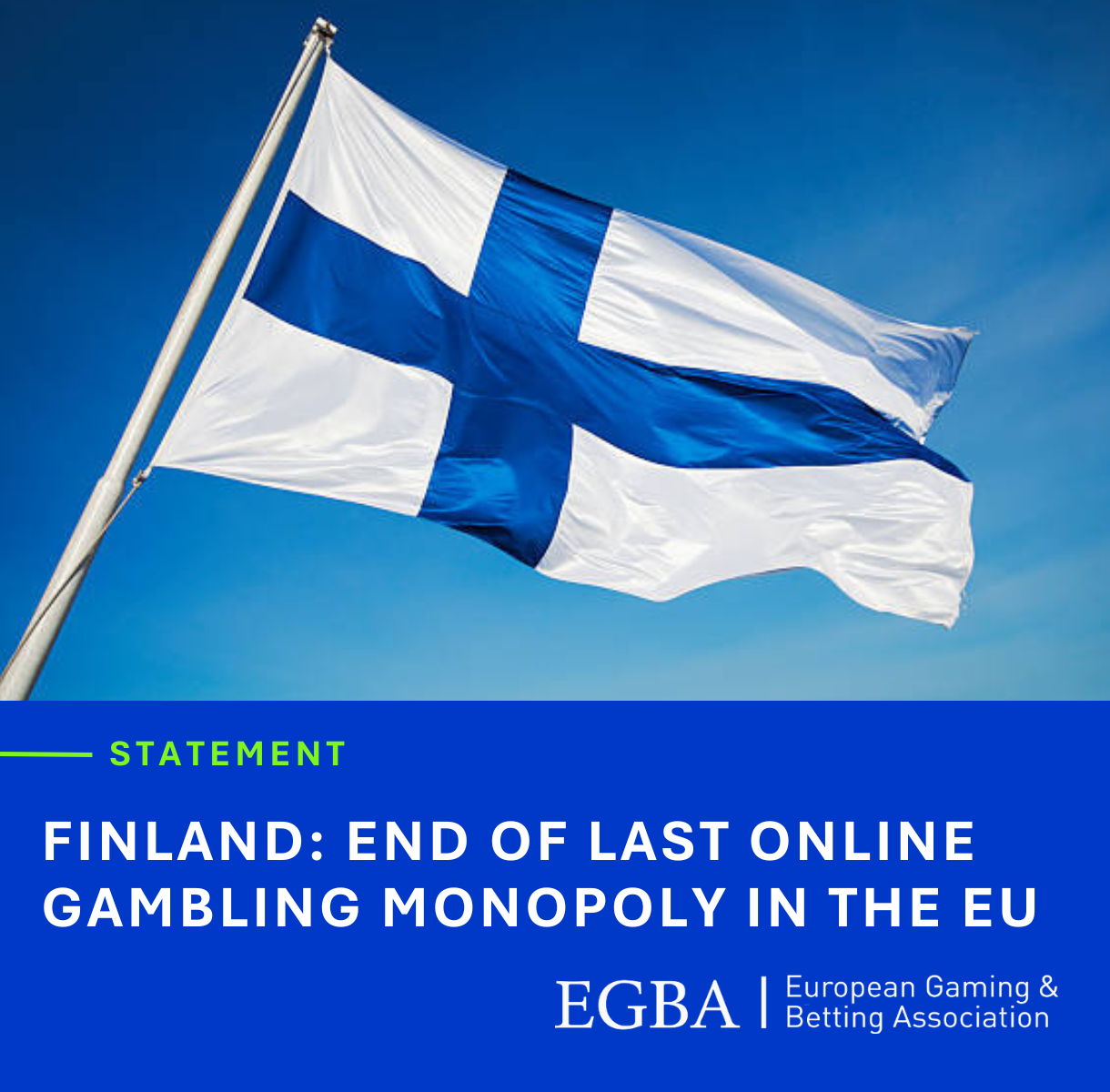
Finland: End of Last Fully Exclusive Online Gambling Monopoly in the EU
23.01.2026
Finland becomes the last EU country to transition to multi-licensing, marking a significant milestone in European gambling regulation.
A European Milestone
The era of fully exclusive online gambling monopolies in the EU is finally coming to an end. Finland’s President Alexander Stubb last week approved legislation ending Veikkaus’s monopoly, making Finland the last EU country to embrace multi-licensing for online gambling. With 95% of Finnish parliamentarians voting in favour, the new multi-licensing framework is set to take effect on 1 July 2027.
Finland’s transition means that every EU member state that regulates online gambling now has multi-licensing. This represents a significant validation of the regulatory approach EGBA has long advocated: that competitive, well-regulated, multi-licensed markets better protect and serve the needs of online consumers and achieve public policy goals more successfully than monopoly systems.
At EGBA, we’ve been calling for licensing reform in Finland for many years, and it’s encouraging to see it come to fruition with such overwhelming political support. Replacing the monopoly held by state-owned operator Veikkaus gained broad backing across Finland’s parliament. Veikkaus also supported the change – clearly recognising the benefits of competition and a more level playing field between itself and other operators.
“We’re pleased that Finland has finally moved to a multi-licensing system for online gambling. The momentum towards multi-licensing in Europe is now complete,” says Maarten Haijer, Secretary General of EGBA. “Governments have concluded that public policy objectives, particularly related to consumer protection, are more effectively met through well-regulated online competition fostered by multi-licensing.”
The Path Forward
But the work doesn’t stop here. The next phase requires ensuring these multi-licensing systems are comprehensive, cover all products, and are fully effective in channelling players away from the black market. Tackling Europe’s growing black market for online gambling must be our collective priority – and it starts with getting regulatory frameworks right.
Whether it’s the remaining fully exclusive monopoly systems in Norway and Iceland, or EU countries that maintain product-specific monopolies or restrictions,[1] these suboptimal regulatory frameworks drive players to the black market. There, basic consumer protections often don’t exist, leaving players vulnerable, and tax revenues vanish.
Multi-licensing offers a proven solution: competitive markets that provide attractive regulated alternatives and effectively draw players away from the black market.
“Similar deliberations about licensing are inevitable in Norway and Iceland – it’s only a matter of time,” adds Haijer. “With nearly 20 years of regulatory experience in Europe, it’s clear that full multi-licensing, for all products, offers the best pathway to create a well-regulated, competitive and consumer-centric market. This approach enhances consumer protection, increases tax revenues, and ensures stronger regulatory control of the market.”
Finland demonstrates that even countries with long-standing monopoly traditions can reform and relaunch their systems to make them fit for the digital age. As Europe’s regulatory landscape continues to mature, the evidence increasingly points in one direction: comprehensive, accessible multi-licensing frameworks consistently deliver better outcomes.
The lesson is clear: no monopoly system – no matter how entrenched – is beyond reform when evidence and public interest align
[1] An EGBA analysis shows that while most European countries have adopted full multi-licensing, several maintain monopolies or restrictions for specific online gambling products, EGBA (2024).
About EGBA
The European Gaming and Betting Association (EGBA) is the Brussels-based trade association representing the leading online gambling operators established, licensed, and regulated within the EU. EGBA collaborates with national and EU authorities and other stakeholders to foster a well-regulated online gambling market that protects consumers and channels consumer demand towards regulated operators. As part of its commitment to player protection, EGBA also organises the annual European Safer Gambling Week, bringing together industry stakeholders to promote safe and sustainable play.
EGBA members collectively hold 321 online gambling licences – each with its own strict compliance requirements – to offer their services across 21 European countries. Beyond these requirements, members also adhere to EGBA’s industry standards and codes on responsible advertising, anti-money laundering, and player protection. Together, they account for approximately 30% of Europe’s online gambling gross gaming revenue.